
Last updated November 2, 2026
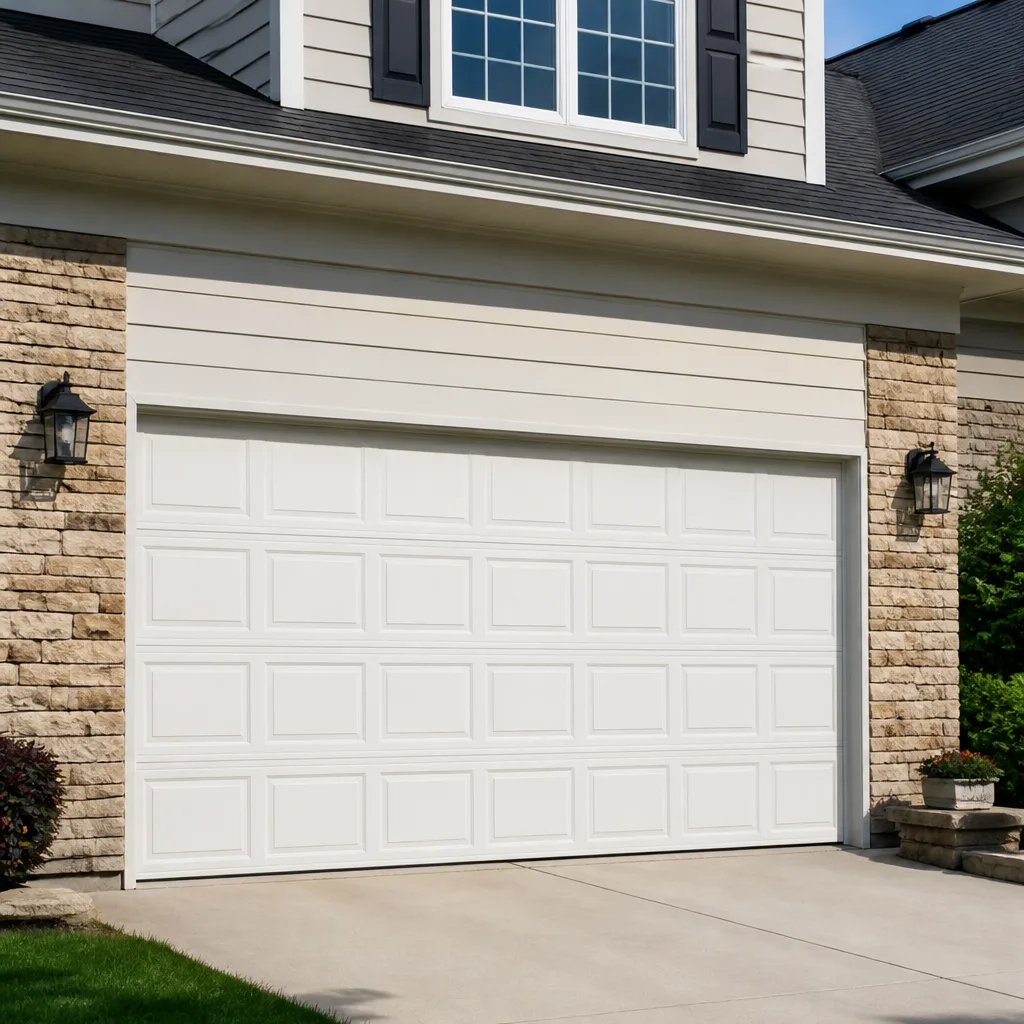 Raised-panel steel
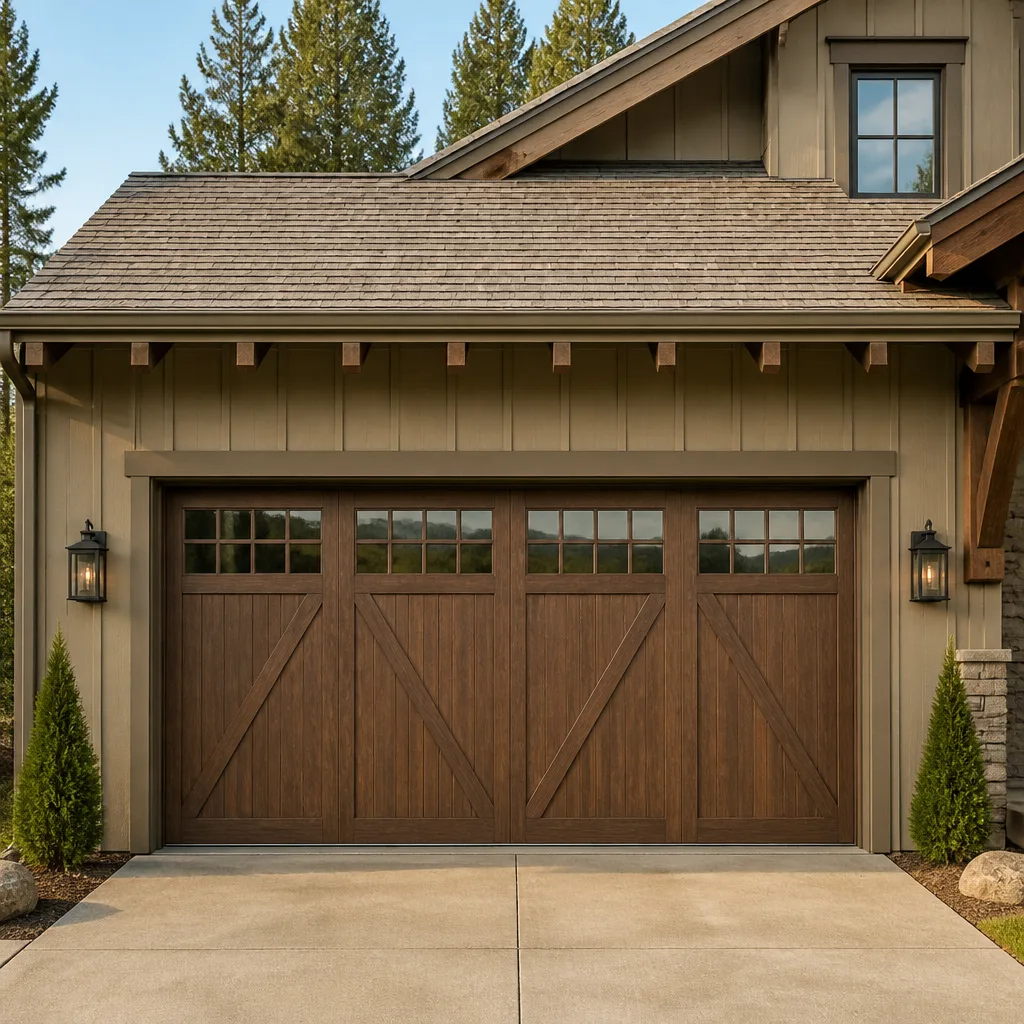 Carriage house
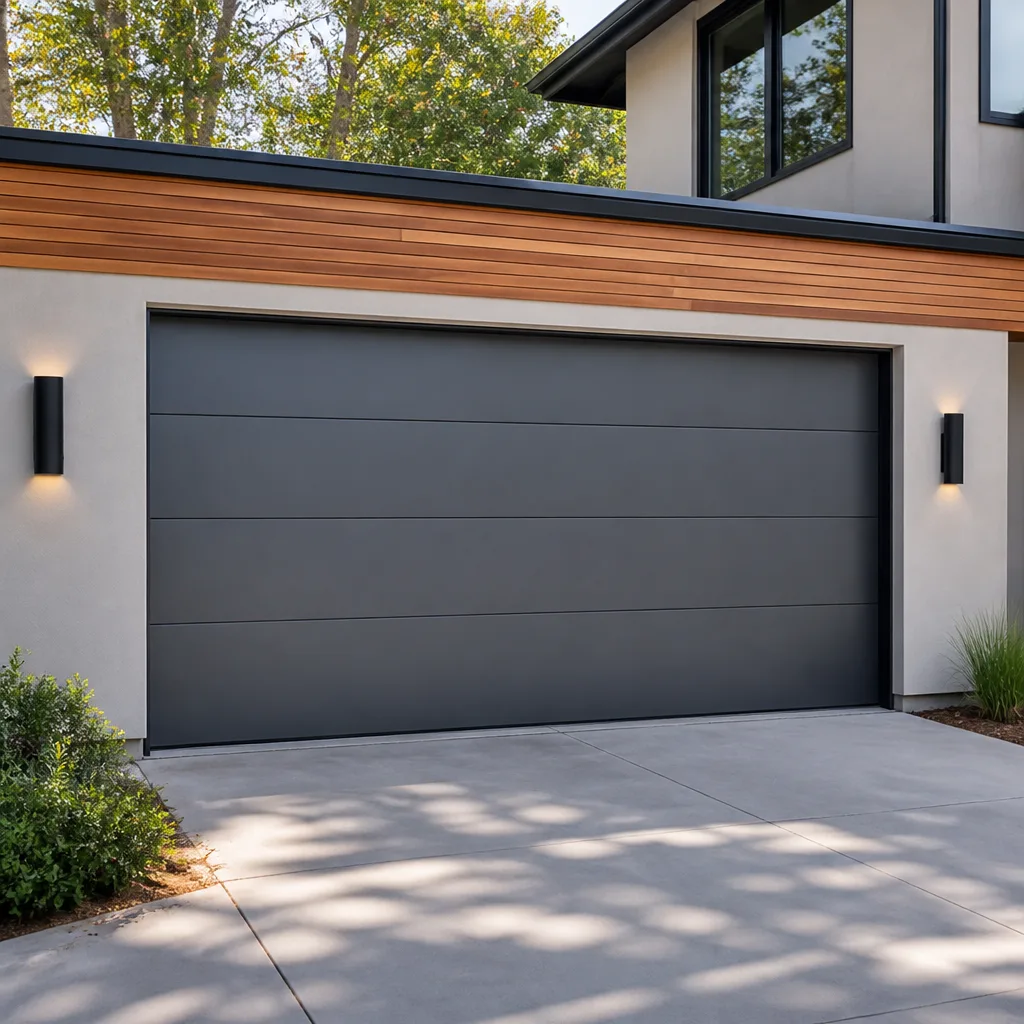 Modern flush
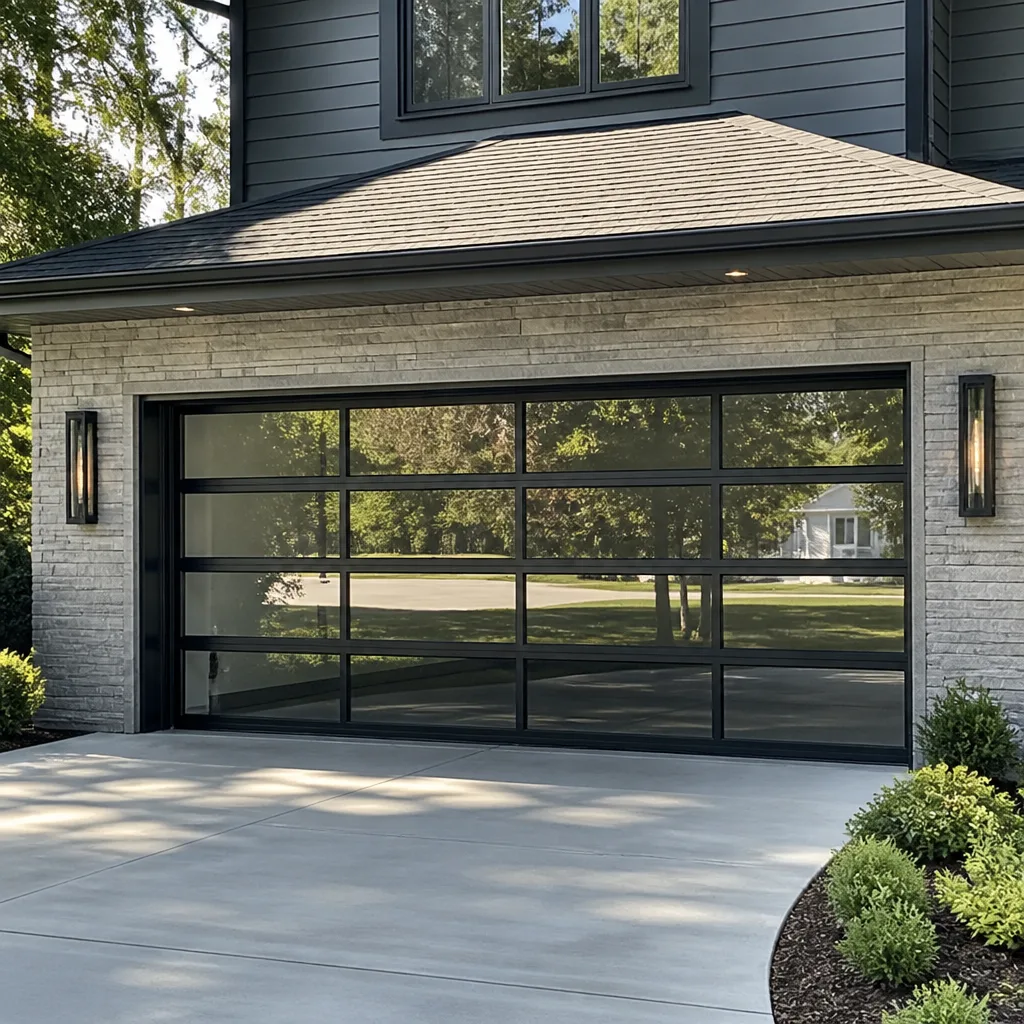 Full-view glass
 LiftMaster openers
 Chamberlain openers
Full 25-point door and opener safety check with every visit - springs, cables, rollers, tracks, and your LiftMaster or Chamberlain opener included
You get a price before we start. It does not change when the truck arrives.
Get your free estimateGarage Door Repair Troubleshooting: Common Problems and How to Fix Them
Here’s something most homeowners in Lake Forest don’t realize: the loudest symptom is rarely the actual problem. A grinding noise might be a $12 roller, not a $400 opener. A door that reverses before touching the ground usually has nothing wrong with its sensors. The gap between what a garage door problem looks like and what it actually is costs homeowners real money every week. This guide walks you through a symptom-first approach to troubleshooting: you’ll learn how to match what your door does to what’s actually wrong, which checks take under a minute, and which two repairs you should never attempt yourself no matter how confident you feel after watching a video. For related reading, see our Garage Door Warning Signs: A Lake Forest Homeowner’s Reference Guide.
Styles & brands we work with
- Raised-panel steel
- Carriage house
- Modern flush
- Full-view glass
- LiftMaster openers
- Chamberlain openers
Quick Answer
Garage door problems fall into four behavioral categories: the door won’t move at all, it moves but struggles or stalls, it reverses unexpectedly, or it makes unusual noise. Most issues trace to a handful of causes: broken springs, worn rollers, misaligned safety sensors, force-setting drift on the opener, or a failing logic board. When in doubt, our Garage Door Repair services can diagnose and fix these problems quickly. Start by testing the door manually to separate mechanical problems from opener problems, then follow the symptom to the specific fix.
Table of Contents
- The Symptom-First Diagnostic Matrix
- The 60-Second Balance Test Every Homeowner Should Know
- Why Your Door Reverses Before Hitting the Ground
- When the Door Won’t Move at All
- Opener Logic Board Failure vs. Motor Failure vs. Force-Setting Drift
- Works Fine Manually but Struggles on the Opener
- What Different Noises Actually Mean
- The Two Repairs You Should Never DIY
- Common Mistakes to Avoid
- When to Call a Professional
- Frequently Asked Questions
- The Bottom Line
The Symptom-First Diagnostic Matrix
Most garage door troubleshooting guides organize problems by part: springs, cables, sensors, rollers. That works if you already know what’s wrong. It doesn’t help when you’re standing in your driveway at 7:15 a.m. with a car trapped inside and a door that’s making a sound you’ve never heard before.
Here’s a better approach. Start with what the door does, then narrow from there:
- Door won’t move at all, opener hums: Springs or cables likely broken, and the opener is straining against the dead weight.
- Door won’t move, no sound: Opener power issue, tripped breaker, or fried logic board.
- Door starts moving then stalls halfway: Balance problem from a failing spring, or an obstruction in the track.
- Door closes then immediately reverses: Usually force-settings or sensor alignment, rarely the sensors themselves.
- Door grinds, squeals, or rattles: Rollers, hinges, or track alignment. Almost never the opener motor.
- Door opens slowly or unevenly: Spring fatigue or cable wear, especially on older doors in coastal humidity areas near Lake Forest.
This matrix matters because parts are expensive and misdiagnosis is expensive. We’ve been called to Lake Forest homes where a homeowner spent $90 on replacement sensors when the real issue was a force-setting that had drifted over a hot summer. The door works differently in July than in January because metal expands and contracts, and garage door openers with automatic force adjustment sometimes overcorrect. That’s a five-minute adjustment, not a parts replacement.
The 60-Second Balance Test Every Homeowner Should Know
If your door is sluggish, jerky, or uneven, you need to know one thing before you spend a dollar: is the door itself balanced, or is the opener fighting extra weight? Here’s the test:
- Pull the red release cord hanging from the opener rail. This disconnects the door from the opener carriage.
- Lift the door manually by the handle. A balanced door lifts smoothly with modest effort and stays put around waist height.
- Lift it to about three feet and let go. A balanced door stays. An unbalanced door either drops or shoots up.
- Try the same at the halfway point and near the top. A door that’s balanced at one height but not another has uneven spring tension.
If the door doesn’t balance, the problem is mechanical: springs, cables, or both. Replacing the opener won’t fix it, and any opener repair you do will only mask the underlying issue until the spring gives out completely.
In Lake Forest, where many homes from the 1990s and early 2000s still have their original torsion springs, we see this pattern regularly. Standard torsion springs are rated for roughly 10,000 cycles, which works out to 7-9 years of normal use. A door that’s been fine for a decade and suddenly seems heavy is usually telling you the springs have reached the end of their working life.
Why Your Door Reverses Before Hitting the Ground
A door that reverses before touching the floor is the single most misdiagnosed garage door problem we see. Most homeowners, and plenty of generalist handymen, reach for the sensors first. Here’s the thing: if the sensors were completely dead, the door wouldn’t close at all. A door that closes partway and then reverses is almost always a force-setting issue or a track obstruction.
Here’s how to tell the difference:
- Door reverses at the same spot every time: There’s an obstruction in the track at that point, or the track has a subtle bend or misalignment. Run your hand along the track and look for debris, bent sections, or loose bolts.
- Door reverses at different points each time: This points to the opener’s force sensitivity. Over time, the force-setting can drift, making the opener think it’s hitting an obstruction when it’s just closing normally.
- Door reverses only in cold weather: Cold stiffens the door’s joints and rollers, increasing resistance. The opener interprets that resistance as an obstruction. The fix is often as simple as adjusting the force setting upward one notch during winter months.
- Door reverses and the opener light blinks: This typically signals a sensor issue: misalignment, dirty lenses, or loose wiring. Clean the lenses first, then check alignment by adjusting the sensor brackets until both LEDs are solid.
The distinction matters because the fixes are wildly different in cost and effort. Adjusting force settings takes five minutes with a screwdriver. Realigning sensors takes ten. Replacing sensors unnecessarily costs $60-100 in parts and doesn’t solve the problem if the sensors weren’t the issue.
For homeowners in Lake Forest, temperature swings between hot inland afternoons and cool coastal evenings can cause a door to behave differently at different times of day. That’s a classic sign of force-setting drift, not a mechanical failure.
When the Door Won’t Move at All
A dead door is actually easier to diagnose than a struggling one, because the possibilities are fewer. The question is whether you hear anything when you press the remote or wall button.
You Hear the Opener Running, But the Door Doesn’t Move
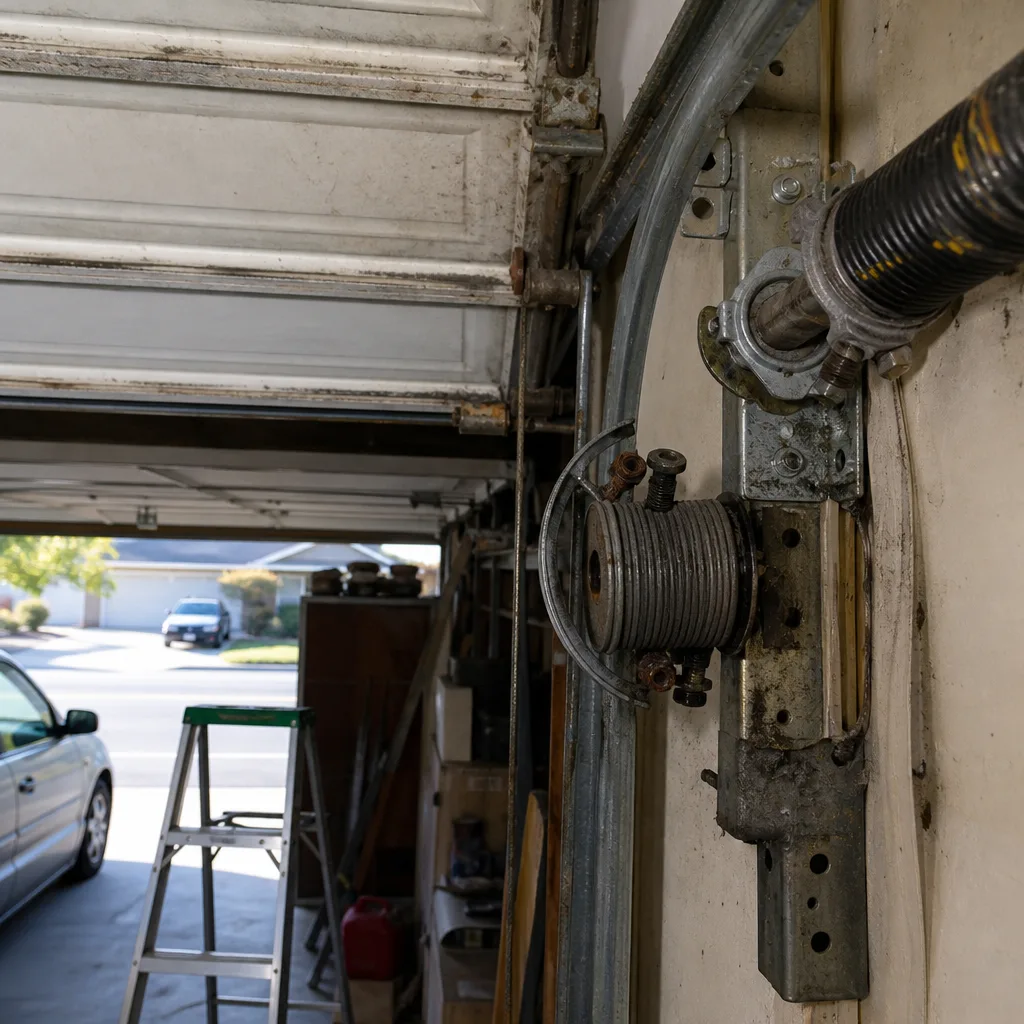
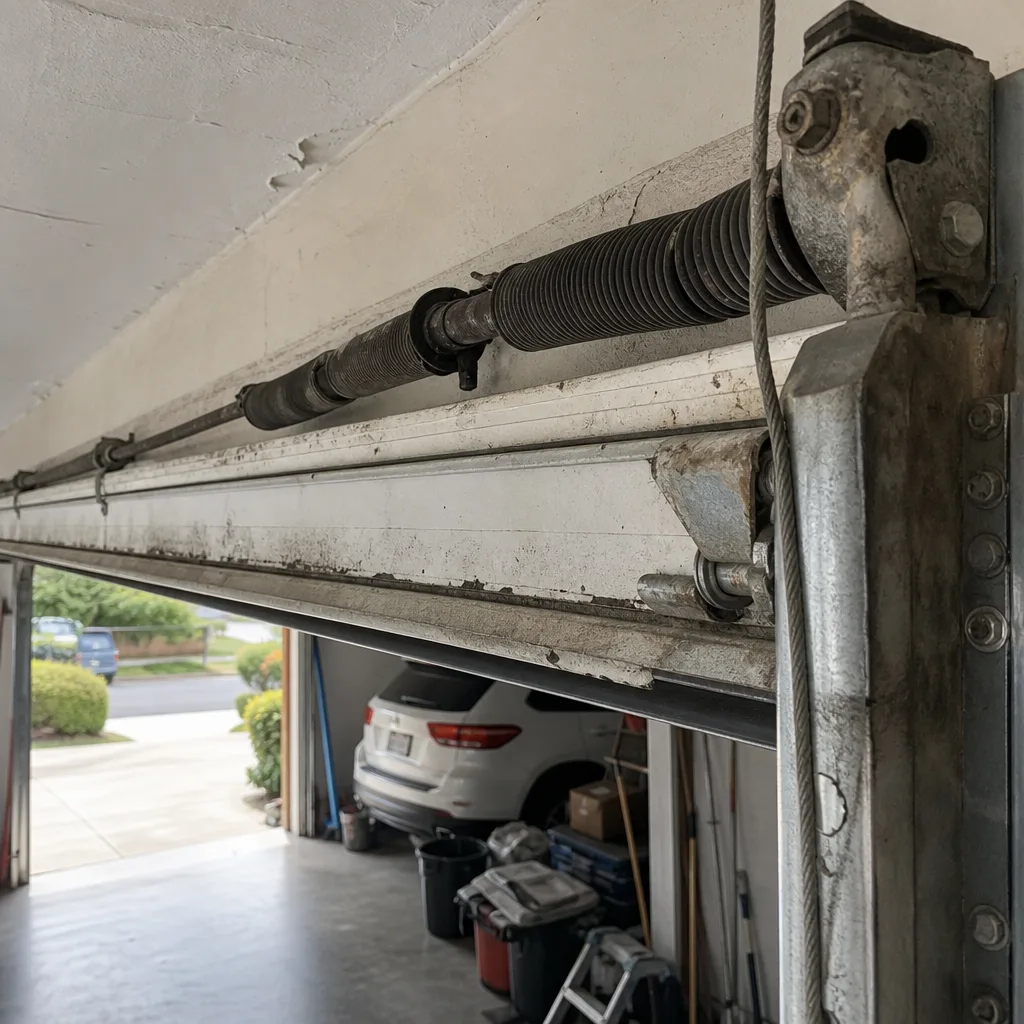
This is almost always a broken torsion spring or a detached spring, not an opener problem. The opener is doing exactly what it’s designed to do: running the carriage up and down the rail. But the springs are what counterbalance the door’s weight, and without them, the opener can’t lift 150-250 pounds of steel and wood. If you look at the torsion tube above the door, you’ll likely see a visible gap in the spring coil.
Don’t try to open or close the door manually in this state. The full weight of the door is unassisted, and if the cable or spring gives way while you’re lifting, the door can drop. This is a professional repair, full stop. For readers in Lake Forest, companies like Creekside Garage Door Repair home page covers this type of repair as a core service.
You Hear Nothing at All
No sound means no power reaching the opener. Before you call anyone, check in order:
- Is the opener plugged in? Check the outlet and any surge protector.
- Is the breaker tripped? Garage door openers are sometimes wired to the same circuit as other outlets or lights in the garage.
- Is the wall button lit? If not, and the outlet has power, the wall button or its wiring may be bad.
- Is the remote’s battery dead? Test the wall button to rule this out.
- Did the opener’s internal breaker or thermal overload trip? Some models have a reset button on the motor unit. Press it and try again.
If all of these check out and the opener is still silent, the logic board or power supply may have failed. That’s a different repair than a motor replacement, and it’s typically cheaper. More on that below.
Opener Logic Board Failure vs. Motor Failure vs. Force-Setting Drift
When an opener misbehaves, the fix could cost $80, $200, or $500, depending on which component is actually at fault. Here’s how to tell the three apart before you authorize any work.
Force-Setting Drift (Cheapest to Fix)
Your opener has two adjustable settings: how much force it uses to open, and how much to close. These settings exist as a safety feature: the opener is supposed to stop and reverse if it encounters more resistance than expected. But over time, especially after temperature swings or minor track shifts, the settings can drift from their correct values.
Symptoms: The door reverses mid-close, or the opener seems to give up while opening. The door works fine manually. The problem comes and goes with temperature.
Fix: Adjust the open and close force settings on the opener. Most LiftMaster and Craftsman models have two screws or knobs on the motor unit, labeled clearly. This is a 5-10 minute DIY job, but if you’re not sure what the correct setting should be, get it wrong and you’ll override a safety feature. Setting the force too high means the opener won’t stop if something is under the door.
Logic Board Failure (Mid-Range Repair)
The logic board is the opener’s brain: it interprets remote signals, controls the lights, and tells the motor what to do. On older LiftMaster and Genie models, these boards fail more often than motors do, especially if there have been power surges.
Symptoms: The opener doesn’t respond to the remote or wall button, but the outlet has power. The opener runs, but doesn’t stop at the right positions. The remote works intermittently, and new batteries don’t help. The opener operates on its own without any input.
Fix: Replace the logic board. This is a harder DIY than force settings because you’re working with wiring and circuit components, but it’s a well-understood repair that an experienced technician can do on-site, usually in under an hour.
Motor Failure (Most Expensive)
Motors in garage door openers are built to last, but they do eventually wear out, especially on doors that were unbalanced for long periods and forced the motor to work harder than it should have.
Symptoms: The opener smells hot when running. It makes a grinding or buzzing sound. It starts, then stops after a second or two. It’s 15+ years old and has been making increasingly concerning sounds for months.
Fix: Replace the opener. At this point, especially in Lake Forest where many openers date from the housing boom of the 1990s, replacing the entire unit is often more cost-effective than repairing a motor that’s already near the end of its expected service life. Our Garage Door Opener Repair in Lake Forest page covers when to repair versus replace in more detail.
Works Fine Manually but Struggles on the Opener
This is one of the most useful diagnostic distinctions in garage door troubleshooting, and it’s one that many people get backwards. If your door opens and closes smoothly by hand but struggles when you hit the remote, the problem is not the door. The problem is in the opener or the connection between the opener and the door.
Here’s what that rules out immediately:
- Broken springs (the door wouldn’t lift manually either)
- Worn rollers (you’d feel the resistance by hand)
- Track misalignment (same)
- Bent panels (same)
Here’s what it points to:
- Opener force settings too low: The opener is giving up before it should. Adjust upward slightly.
- Opener horsepower insufficient for the door: This shows up after a homeowner replaces a lightweight aluminum door with a heavy wooden or insulated steel door but keeps the old opener. A 1/3 HP opener from 1998 can’t lift a modern double-carriage door.
- Worn drive gear or belt: On screw-drive and belt-drive openers, the drive mechanism itself can wear. A stripped gear produces a characteristic grinding sound while the door stays put.
- Travel limits set incorrectly: If the opener thinks the door has reached its fully open position when it hasn’t, it stops early. This is a limit adjustment, not a mechanical repair.
The key thing to remember is this: if the door feels good by hand, the door is good. Don’t let anyone sell you new springs or rollers for a door that passes the balance test. We work on Wayne Dalton, Raynor, LiftMaster, and Craftsman equipment in Lake Forest homes, and we’ve seen every version of this misdiagnosis. The right fix starts with respecting what the door is telling you.
What Different Noises Actually Mean
Garage doors make a lot of sounds, and most of them are normal. But certain noises are specific and diagnostic. Here’s a quick reference:
- Squealing or screeching: Dry or worn rollers, especially metal rollers. Repeated squeals that follow the door’s movement pattern point to specific rollers. Lubricate with silicone spray as a temporary measure; if the squeal comes back, the roller bearing is shot.
- Grinding or crunching: Broken roller bearings, debris in the track, or a worn opener drive gear. Grinding from the opener housing itself usually means the drive gear is stripped.
- Rattling: Loose hardware: hinges, bolts, track brackets. Tighten everything that moves. If the door itself rattles while the hardware is tight, check the panel joints.
- Thumping or banging during operation: The door is unbalanced, and the opener is dropping it faster than it should. This is a balance issue, not a normal noise.
- Clicking from the opener: The relay or limit switch engaging. A single click with no movement can indicate a bad capacitor on the opener.
- Vibrating or humming: For a few seconds, normal. If it continues while the door isn’t moving, the motor is straining against something and the force settings are too low, or there’s an obstruction.
Lubrication resolves a surprising number of noise complaints. Twice a year, hit the hinges, rollers, and springs with a silicone-based lubricant. Don’t use WD-40: it’s a solvent, not a lubricant, and it’ll wash out the grease the components actually need. In Lake Forest’s climate, with its warm dry summers and occasional coastal fog, lubricant breaks down faster than in drier inland areas, so twice-yearly maintenance is worth it.
The Two Repairs You Should Never DIY
We get asked about DIY garage door repairs a lot. Most of the time, we’re happy to tell people what they can safely handle: lubricating hinges, adjusting force settings, realigning sensors, replacing remote batteries. Those are fine. For How to Hire a Garage Door Contractor in Lake Forest: A Step-by-Step Guide, see our detailed walkthrough.
But there are two repairs that look approachable on video and can put you in the emergency room. Here they are, in plain language:
1. Torsion Spring Replacement
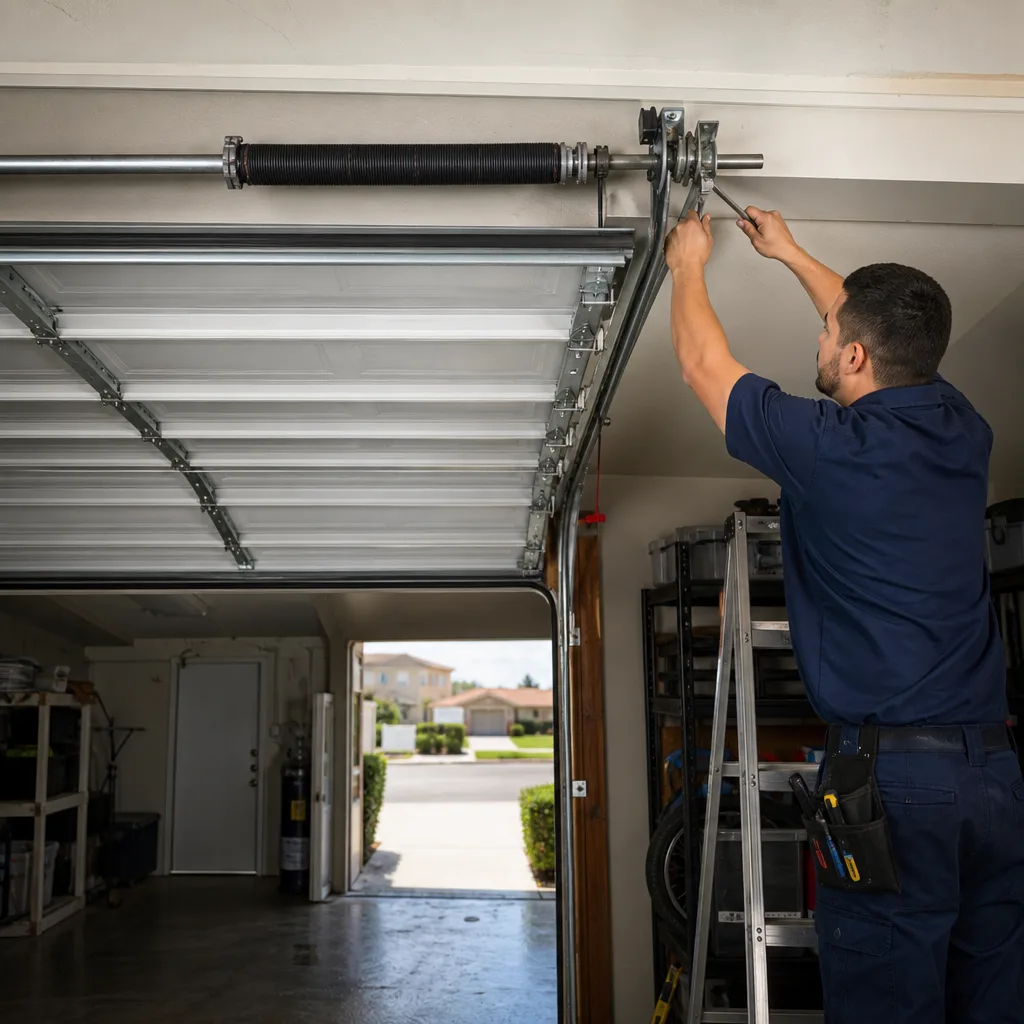
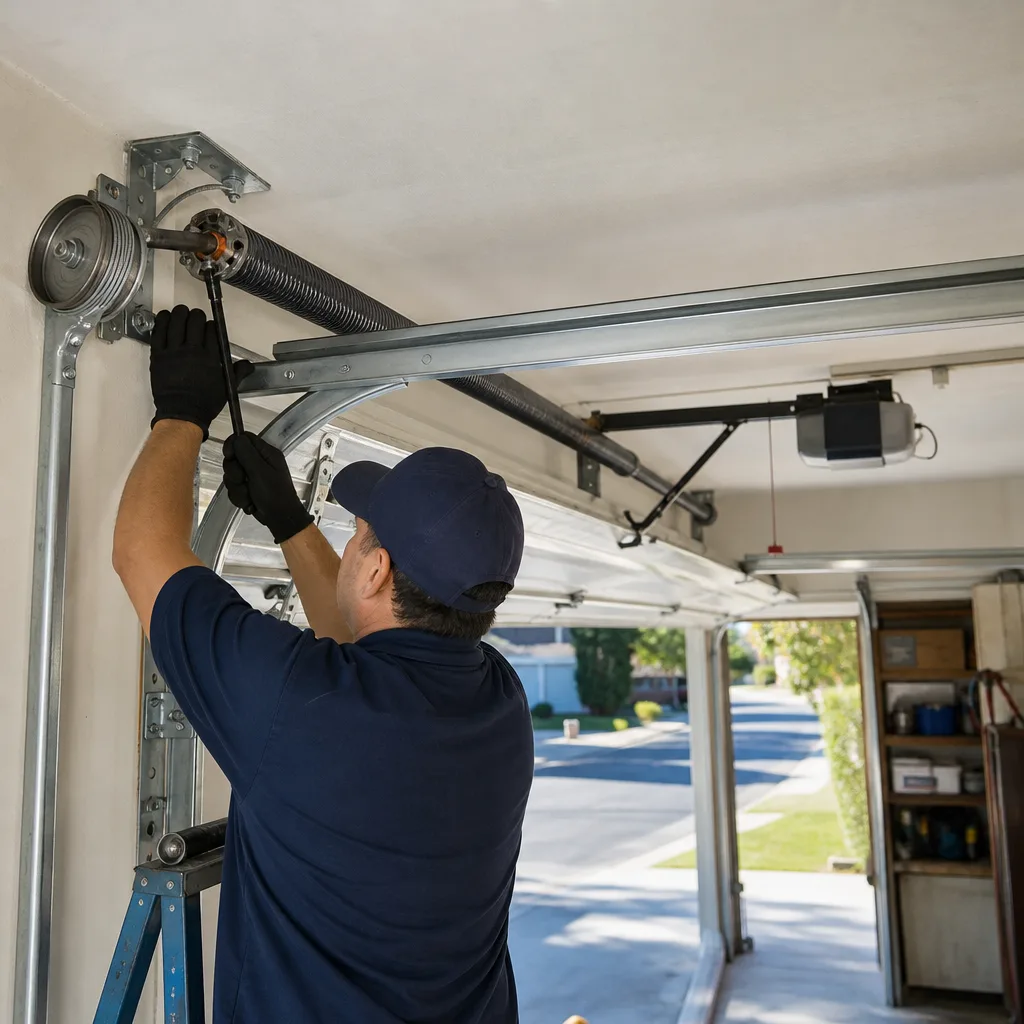
Torsion springs are the tightly wound coils on the bar above your garage door. They hold an enormous amount of stored energy, which is exactly what allows them to lift a 200-pound door. When one breaks, the temptation is to buy a replacement spring online and install it yourself. The springs are not expensive. The tools are not complicated. The problem is that winding a torsion spring to the correct tension requires specialized winding bars and a precise number of quarter-turns. Get it wrong and the spring can unwind violently. Emergency rooms see a steady stream of hand and facial injuries from exactly this repair. This is not a job for a confident first-timer. It’s a job for a trained technician with the right tools and the right liability insurance.
2. Cable Reattachment
Lift cables run from the bottom brackets of the door up to the drum near the top. When they come off, the door hangs unevenly or doesn’t lift at all. The cable itself looks simple: it’s just a steel line running over a wheel. But re-routing a cable means taking tension off the spring system, and if the spring lets go while you’re working on it, the cable becomes a whip. The same energy that lifts the door can snap a cable, and a snapped cable under tension can cut through skin. Professional repair call, full stop.
If you’re in Lake Forest and either of these problems hits, call a professional. The repair cost is modest compared to what urgent care will bill you.
Common Mistakes to Avoid
- Replacing sensors before checking force settings. A door that reverses mid-close is usually a force issue, not a sensor issue. Test the cheap fix first.
- Lubricating the tracks. The track looks like it should be lubricated, but lubrication attracts dust, which creates a paste that makes the rollers work harder. Lubricate hinges, rollers, and springs. Leave the tracks clean and dry.
- Ignoring a door that’s slightly out of balance. A door that’s a little heavy on one side is putting uneven wear on springs, cables, and rollers. The repair gets more expensive the longer you wait. This is especially common in Lake Forest’s older neighborhoods, where doors from the 1980s and 1990s are common.
- Buying a new opener for a mechanical problem. If the door doesn’t balance manually, a new opener won’t fix it. Address the mechanical issue first.
- Replacing a whole door when the panels are damaged. Panel replacement is possible on many doors, especially from major manufacturers like Wayne Dalton and Clopay. It’s cheaper than a full door replacement, and it preserves the tracks and springs that are still working fine.
- DIY-ing a spring replacement after watching one video. Covered above. It’s the one repair where the cost of a professional is a bargain compared to the downside of getting it wrong.
- Skipping the balance test when the door seems sluggish. The balance test takes 60 seconds and tells you more than any other single diagnostic. Do it before you call anyone, so you can describe the problem accurately.
When to Call a Professional
You can handle sensor realignment, force-setting adjustments, lubrication, and remote programming. You can diagnose problems using the matrix in this guide. But certain situations call for a pro, and being honest about that saves time and money. Browse more guides & resources for additional maintenance tips.
Call a professional when the torsion spring is broken or visibly damaged. When a cable has come off the drum or shows fraying. When the door won’t balance manually, and the balance test fails. When the opener’s logic board is failing and you’re not comfortable working with electrical wiring. When the door is off its tracks, even by a little. When the door is more than 20 years old and has multiple simultaneous issues. And any time the door drops faster than normal, because that’s a safety hazard for anyone in the garage.
Creekside Garage Door Repair offers free estimates in Lake Forest. Call (877) 358-5495 for a diagnostic visit on Garage Door Repair in Lake Forest or Garage Door Installation in Lake Forest, and we’ll tell you what’s actually wrong and what it’ll cost before any work begins.
Frequently Asked Questions
A broken torsion spring usually shows a visible gap in the coil above the door. You’ll also notice the door is extremely heavy to lift manually and the opener may not lift it at all. If the door was working yesterday and suddenly won’t move today, that’s a spring. Call (877) 358-5495 for a professional repair in Lake Forest.
This usually means the travel limits are set incorrectly, or the door is hitting an obstruction in the track. Less commonly, a spring has lost tension on one side and the door is cocking sideways mid-travel. Test the balance manually. If it’s fine, check the limit settings on the opener. If it’s not, you need a spring inspection. Estimates are free, so call us if you’re unsure.
Repair costs in Lake Forest vary by the part and labor involved: sensor realignment typically runs $75 to $150, roller replacement $100 to $200, spring replacement $200 to $350, and opener logic board replacement $150 to $300. Most repairs are quoted upfront before any work begins. Call (877) 358-5495 for an exact quote based on your door’s specific symptoms.
Yes, if the door itself is balanced and the springs are intact. Pull the red release cord and lift. If the door won’t stay up or drops when you let go, the springs or cables are failing, and you should call a professional before using the door again. A door that drops unexpectedly can cause serious injury or property damage.
Twice a year: lubricate hinges, springs, and rollers with silicone spray, and run the balance test. Lake Forest’s temperature swings and occasional marine layer create condensation that breaks down lubricant faster than in dryer climates. A 10-minute check in spring and fall will catch most issues before they become emergency repairs.
We service eight major brands: LiftMaster, Chamberlain, Genie, Clopay, Amarr, Wayne Dalton, Craftsman, and Raynor. We work on what you have, not what we’d like to sell you. If you’ve got a door from a brand not on that list, call anyway; the systems overlap more than most people think, and we’ll let you know quickly whether we can help. Call (877) 358-5495 with your door or opener model and we’ll tell you right away.
The Bottom Line
Garage door troubleshooting is about matching behavior to cause. A door that won’t move is a spring or power problem. A door that moves but struggles is a balance or opener problem. A door that reverses is usually a force-setting or sensor issue. A door that makes noise is usually a lubrication or roller issue. Learn the 60-second balance test, keep the tracks clean, and don’t attempt torsion spring or cable repairs yourself. When in doubt, call a professional who can diagnose the actual problem rather than treating the symptom. In Lake Forest, that’s us: Creekside Garage Door Repair. Call (877) 358-5495 for a free estimate, and we’ll get your door back up and running.
Written by the team at Creekside Garage Door Repair, serving Lake Forest since 2014.
See the difference
 Before
 After
 Before
 After
 Before
 After